



Notes from the Nominators
Whitby is a community defined by a rare balance of history, natural beauty and forward-thinking growth. Situated along the shores of Lake Ontario and stretching north toward the Oak Ridges Moraine, the town blends the charm of small-town living with the opportunities and amenities of a growing urban center. What makes Whitby special is not just its landscape or its built form, but the way these elements work together to shape a strong, vibrant and deeply connected community.
Whitby’s landscape is one of its most defining characteristics. The southern edge of the town is shaped by the Lake Ontario shoreline, where the Whitby waterfront acts as a gathering place for residents and visitors alike. The harbor, marinas, trails and parklands create a sense of openness and shared public space that encourages movement and interaction. A short distance away, Lynde Shores Conservation Area stands out as one of the region’s most accessible natural spaces, offering opportunities for wildlife viewing, family outings and nature education. As the town extends northward, the terrain shifts to rolling countryside, farms and woodlots — reminders that Whitby remains closely tied to the rural and environmental systems surrounding it.
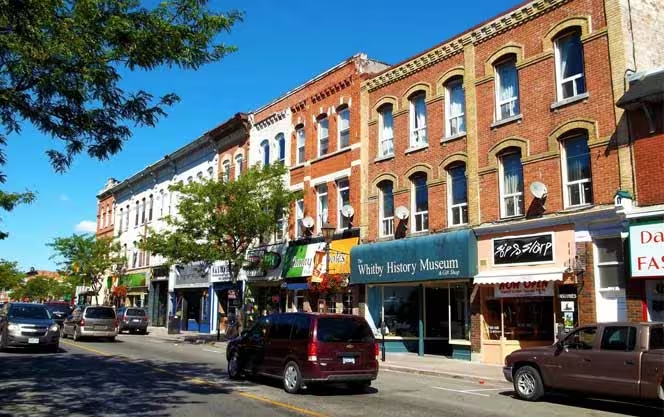
Urban design is another area where Whitby distinguishes itself. The town has preserved its historical character while thoughtfully planning for the future. Unique among GTA municipalities, Whitby features two historic downtowns, Downtown Whitby and Brooklin, each with its own distinct identity. Downtown Whitby is known for its 19th-century architecture, small businesses and civic institutions, while Brooklin maintains a village-like feel, with heritage storefronts and a growing culinary scene. In recent years, both areas have begun experiencing a deliberate shift toward increased density and walkability, supporting a more vibrant, people-focused urban environment. This evolution reflects Whitby’s broader planning philosophy: growth that is balanced, sustainable and respectful of existing character.
Culturally, the town’s offerings are diverse and community-driven. Institutions like the Whitby Public Library and Station Gallery act as hubs of creativity, learning and local expression. A rich calendar of festivals and gatherings (including food events, seasonal markets, community runs and the well-loved Brooklin Spring Fair) strengthens the town’s social fabric. These celebrations provide more than entertainment; they reinforce a shared identity and create traditions that residents take pride in passing on.
Yet the heart of Whitby lies in its people. Residents often describe the town as friendly, safe and family-focused: a sentiment reflected in the strong culture of volunteerism and community involvement. Whether through coaching local sports, supporting arts programs or participating in civic initiatives, Whitby residents consistently demonstrate a desire to contribute to the well-being of their community. Over time, the town has also become increasingly diverse, with new cultures, languages, cuisines and perspectives enriching the social landscape and broadening the town’s identity.
Finally, Whitby benefits from a level of connectivity that enhances its livability. With direct access to GO Transit and major highways such as the 401, 407 and 412, residents enjoy proximity to Toronto while maintaining a quieter, more relaxed pace of life. This combination of accessibility and calm is one of the features people value most, offering the convenience of the Greater Toronto Area without the intensity of urban congestion.
In the end, Whitby’s distinctiveness comes from its ability to hold multiple identities simultaneously: lakeside and rural, historic and modern, quiet and vibrant, established and evolving. Its natural landscapes, thoughtful urban design, rich cultural life and engaged residents all contribute to a community that feels grounded yet full of potential. Whitby is more than a place to live — it is a place to belong, to participate and to grow.
Building a Resilient Future: Whitby’s Community Strategic Plan in Action
In the spirit of a Strong Town, the Town of Whitby has moved beyond traditional top-down governance to a model of collaboration. At the heart of this transformation is the 2023–2026 Community Strategic Plan (CSP) — a roadmap designed not just for the people, but by the people. By bridging the gap between resident lived experience and municipal technical expertise, Whitby is creating a more resilient, responsive and connected community.
A Vision Built on Resident Voices
The CSP is rooted in an unprecedented level of civic engagement. During its development, more than 3,000 residents participated through surveys, workshops and town halls to define what “home” should look like. This collective effort resulted in a plan organized around four critical pillars:
Community: Safe, Healthy and Inclusive Neighbourhoods
Environment: Natural and Built Environment
Economy: Local Economy and Growth
Government: Strong and Transparent Government
The plan is not a static document; it consists of 62 measurable action items. As of early 2026, the town has demonstrated a commitment to transparency by reporting that all of these items are either completed or actively underway, ensuring that the community’s vision is translated into tangible results.
Tackling Critical Needs: The Fight Against Food Insecurity
A standout example of the CSP’s impact is its direct response to the rising cost of living and food insecurity. Under the pillar of Safe, Healthy and Inclusive Neighbourhoods, the town collaborated with community partners to address a growing gap in social infrastructure.
The result was the launch of The Market at Iroquois Park Sports Centre. In partnership with Feed the Need in Durham, this initiative reimagined the traditional food bank model. Instead of receiving prepacked hampers, residents use a market-style approach, allowing them to select their own groceries in a way that prioritizes dignity, choice and waste reduction.
The impact of this program has been significant:
Expansion: Due to a surge in demand, the town proactively expanded the Market’s operating hours in 2025.
Collaboration: The project bridges municipal facilities, nonprofit expertise and local volunteers.
Funding: Beyond providing physical space, the town continues to support local food security through the Mayor’s Community Development Fund, which provides grants to grassroots organizations working on the front lines of hunger.
This approach embodies the Strong Towns philosophy by focusing on incremental, resident-led improvements that address immediate needs while building long-term resilience. By treating neighbors as essential partners rather than just taxpayers, Whitby ensures that its growth is financially productive and socially equitable. Through the CSP, Whitby has demonstrated that when city staff and elected officials listen to the everyday observations of their neighbors, they can build a community that is not only functional but deeply supportive of all its members.
In Whitby, the response to rising food insecurity has been a true Strong Towns collaboration, leveraging existing social networks to fill gaps quickly. While the town provided space at Iroquois Park Sports Centre, the project relies heavily on a grassroots network of local churches and faith-based organizations to sustain its operations.
The Role of Faith-Based Partnerships
A dignity-first network: Local churches across Whitby serve as the backbone for community food distribution. Rather than waiting for new government infrastructure, these congregations use their existing kitchens and halls to provide immediate relief.
The Market collaboration: The Iroquois Park Market integrates with these groups; for example, many church-run programs refer residents to the Market and coordinate with Feed the Need in Durham to ensure supplies are distributed where they are most needed.
The Mayor’s Community Development Fund: To bolster these efforts, the town uses the Mayor’s Community Development Fund to provide grants directly to these faith-based food programs. This allows groups such as St. John’s Anglican Church or Whitby Baptist Church to scale their existing services, such as community meals or pantry programs, using the tools they already have on hand.
By partnering with these established religious institutions, the town avoids duplicating efforts and instead strengthens the safety net already built by neighbors.
What inspires me about Whitby is the town’s refusal to let its rapid growth come at the expense of human connection. In many expanding municipalities, residents can feel like small gears in a massive machine, but Whitby is actively flipping that script through the 2023-2026 Community Strategic Plan.
Specifically, I am inspired by:
The all-hands spirit: When the community faced a hunger crisis, it did not simply become a line item in a budget. It became a collaborative mission where the town provided space at Iroquois Park Sports Centre, Feed the Need in Durham provided the logistics and local churches provided the volunteer heart. Seeing these different silos break down to serve a common goal is the definition of a Strong Town.
Action over apathy: It is rare to see a municipality track 62 specific action items with such public accountability. Knowing that more than 3,000 neighbors helped write the plan, and can now see those results in the form of new traffic-calming policies or business grants, demonstrates that local government can be responsive rather than bureaucratic.
The focus on dignity: The shift toward market-style food banks shows that Whitby is not just looking for the cheapest solution; it is looking for the kindest one. This commitment to maintaining the dignity of every neighbor, regardless of circumstance, builds the social trust necessary for a community to thrive long term.
