



Listen and LEarn
Photo Gallery
Tour the Town


Notes from the Nominators
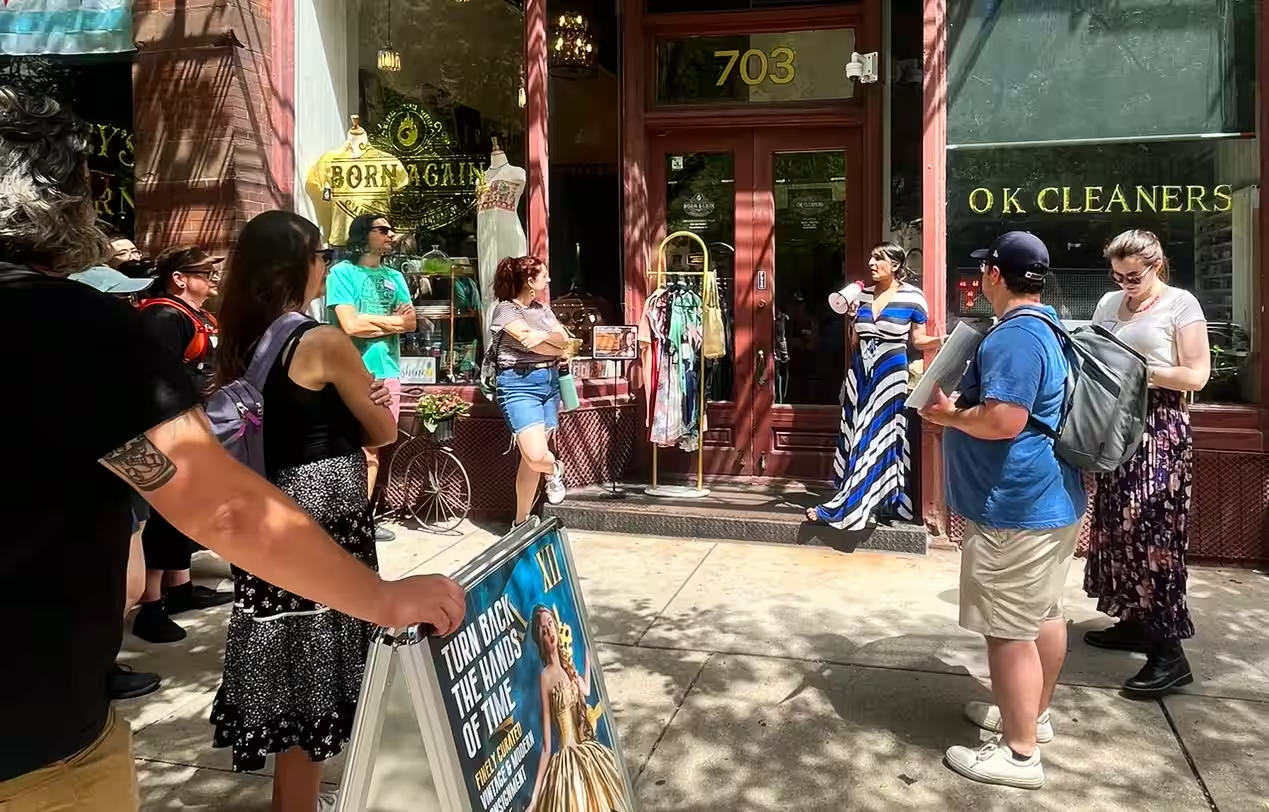
Chicago is one of the few big North American cities where daily life still works at a human scale. While many people first think of downtown and high-rises, Chicago is really a patchwork of neighborhoods that function like towns of their own, each with its own main street, local businesses, parks, schools and community institutions.
That neighborhood fabric is built into Chicago’s design: two- and three-flats, courtyard buildings, mixed-use corridors and dense residential blocks. These designs support local restaurants, corner stores and everyday errands on foot. Add in the lakefront and one of the most iconic transit systems in the country, and Chicago becomes a city that invites people into public life, even in its famously cold, windy winters.
Chicago has big-city culture and influence, but at its core, it is a network of small communities suffused with Midwestern nice. Neighbors organize block by block, show up for each other and keep working to make their neighborhoods stronger.
Strong Towns Chicago neighbors do not just complain about city problems; they organize alongside city staff, partner organizations and elected officials to fix them. One unique example came during the transit fiscal cliff, when Chicago faced the possibility of losing up to 40% of its public transit service in the summer of 2025.
To raise awareness and build public support, we launched Funny You Should Care, a civic improv comedy show that uses storytelling to make transportation policy understandable, urgent and engaging. The show has featured guests such as Nora Leerhsen, acting president of the Chicago Transit Authority, and Illinois state legislators, creating a rare space where residents can learn and connect directly with decision-makers in a format that feels welcoming instead of intimidating.
We have also partnered with local advocacy groups such as Better Streets Chicago and Active Transportation Alliance to bring more voices into the conversation. Importantly, after transit funding passed, public leaders told us the show played a real role in building momentum for funding. We also heard the same framing and arguments from our show echoed later in public remarks and on the Statehouse floor.
It is a distinctly Chicago approach: using improv, humor and community building to turn complex issues into real civic action. We are now expanding the format to include local aldermen and street safety priorities.
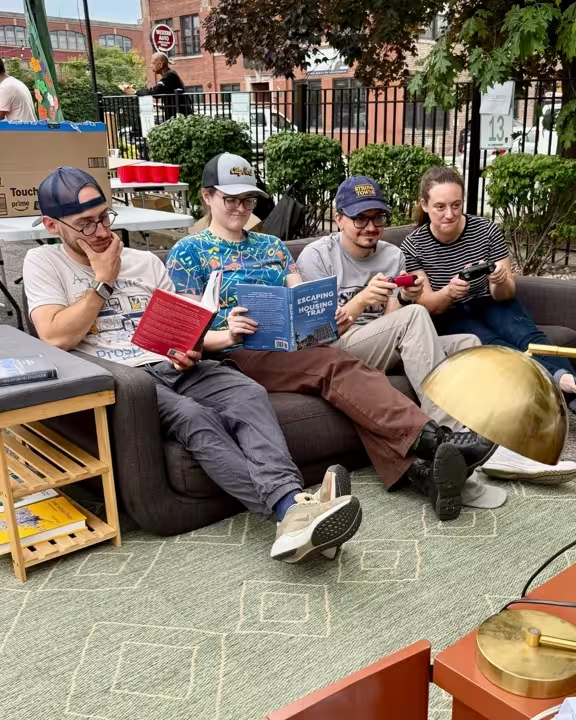
One recent example is Chicago’s push to relegalize accessory dwelling units, or ADUs. Residents were feeling the housing trap firsthand: rising rents, fewer options for seniors who wanted to age in place and families struggling to stay in their neighborhoods.
Rather than waiting for a major new development plan or a large funding program, advocates focused on a small, practical fix that could be implemented within existing blocks. Strong Towns Chicago supported this effort by educating neighbors about what ADUs actually are and what they are not, while showing up consistently at public meetings and in conversations with city leaders.
That steady, community-driven work helped lead to the legalization of ADUs, creating new opportunities for small, attainable housing units that fit naturally into Chicago’s existing neighborhood fabric.
The people here are a constant source of inspiration, from neighbors who care deeply about their blocks to friends and fellow residents who show up again and again to make their communities better.
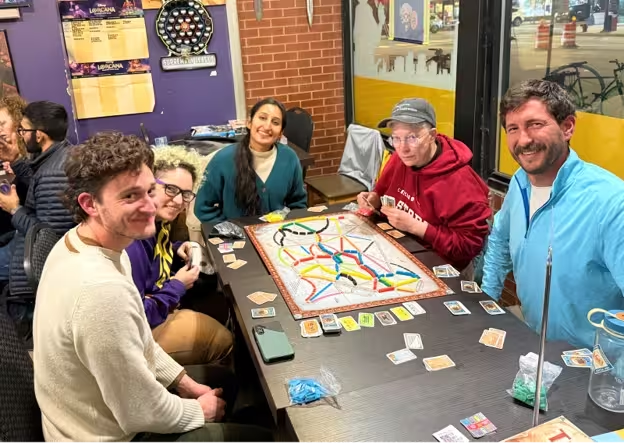
At Strong Towns Chicago, we often describe ourselves as a social club that does urbanism as much as an advocacy organization. We gather because we genuinely enjoy spending time with other Chicagoans, sharing ideas and building relationships, and that sense of camaraderie is what keeps the work meaningful and energizing.
Chicago is a complicated city, but it is also a city where people keep choosing public life, whether it is supporting local businesses, showing up to community meetings, organizing on their own streets or pushing for a better future even when progress is slow.
Seeing that mix of resilience, creativity and neighbor-to-neighbor care is what inspires us to keep working to make Chicago stronger.
